
Introduction
Today AI is a hot topic. Everyone is talking about AI; everyone claims to work on AI. After 65 years of existence of the concept of AI, thousands of PhDs, hundreds of thousands of publications — where is AI (the strong one)?
If you put two people working in the field of AI together, you will have conflicts, misunderstandings, and inconsistencies.
The problem already comes from the definition of intelligence. In my opinion, there is no functional definition of intelligence that can be used as a tool applicable to any discussion about intelligence.
During my lectures on new technologies, AI, and projects in general, I continuously see methodological errors in requirements or in development. Here are a few examples:
- The words and references are not explained
- There is confusion between causes and effects — often we identify something that is a result, and we strive to create the result. But the result will come if we correctly create the cause
- People are not working at the right level
- People are not asking the right questions
- People do not stay critical about their own findings
- People do not check the consistency and alignment between what they want, what they have found, and what reality is
I can quote Karl Popper, who is of great help regarding scientific methodology:
« Rational is any person who spends more time criticizing his or her points of view than the views of others or justifying them, because by criticizing his or her own view, he will arrive at the least criticized position — and the least criticizable position is the closest to the truth. »
« A theory which is not refutable by any conceivable event is non-scientific. Irrefutability is not a virtue of a theory (as people often think) but a vice. »
Let us burn everything and start again from a white page. Let us find a definition of intelligence that can be used as a tool for any discussion or development.
Defining « Artificial »
When we speak about artificial intelligence, we must not only define the words « intelligence » and « artificial, » but we must also check the consistency of the whole expression. Defining an expression means defining not only its terms individually but also their relationship.
There are different ways to define a word:
- Go back to its original meaning, mainly via etymology.
- Redefine it in retrospect, because the first definition emerged only in a context where the understanding of the word was not supported by experiments.
- If we cannot do either, we can define it by stating what it is not.
Let us begin with the definition of « artificial » and use the last method.
Artificial is something which is not natural. Something is natural if it can emerge spontaneously in the universe.
We can see the universe as a continuous chain reaction triggered by physical laws that led to the creation of stars, planets, life… Every « natural » item, from atoms to more complex ones, is the result of this chain reaction. Look at the sun: it is the result of this chain reaction. There was no option between the one we know and another one at this place and this time in the universe — the one we know was the only possible result given the conditions and the physical laws.
Now look at your car. You will never see a car emerging spontaneously in the universe. Your car — the blue one — is an option among others, which is the result of your will.
Be careful: when I speak about a will, I see it as the result of a need that has to be fulfilled. It is something unconscious.
The Internal State and the Emergence of Will
Every life form in the universe is driven by only one thing: maintaining the equilibrium of its internal state. The internal state can be represented by all the physiological interactions of molecules inside the body. In the case of human beings, there are hundreds of them interacting every second — molecules like serotonin, dopamine, insulin, adrenaline, thyroxine… Those molecules allow your internal functions to stay at equilibrium.
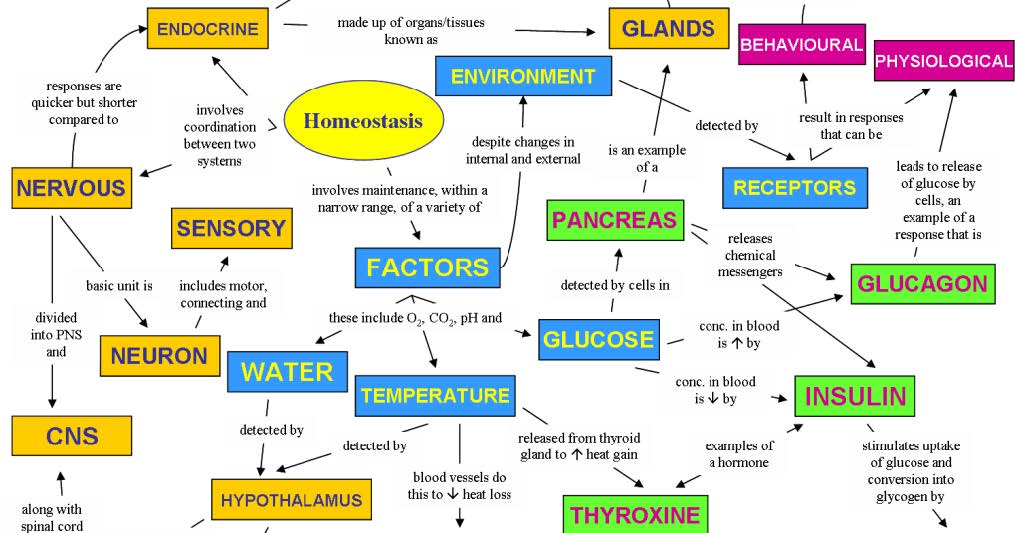
To maintain this internal equilibrium, we need to regulate our internal state by decreasing or increasing the number of these molecules.
We can see our internal state as a disc placed on a tip. Every point on the disc represents one of these molecules. The disc is in a permanent unstable state and is threatening to fall because each point is increasing or decreasing in weight. The disc needs a small « push » somewhere to get back to a more stable state, but the environment leads it again to an unstable state. Every push that must be done to maintain the equilibrium is different in strength and place. These differences in « push » represent different combinations of molecules that need to increase or decrease in amount. The body tries to answer each of these combinations (which dynamically change in real time) by « doing something. » This « doing something » is what I call the unconscious will that emerges from needs.
This is where I place the frontier between what is natural and what is artificial: the presence of a will.
Take a bacterium that can move in every direction and that has a need for some food at one moment. The bacterium can move left or right — there are different options for the same conditions and physical laws.
An anthill is, in this case, something artificial: for a specific place in time, there are different options of an anthill, since ants can behave differently, like the bacterium that can move left or right.
Defining Intelligence
It is hard to define intelligence; there is no standard and functional definition.
Some people define intelligence as:
- An ability to understand and adapt to a new situation
- An ability to process information to achieve a goal
- A set of mental functions for rational knowledge
Let us ask ourselves: what is the purpose of the concept of intelligence? What do we want to achieve by using such a concept?
Intelligence is something we want to measure, to classify or rank entities in relation to each other. It is a parameter we want to use to describe a capability, which implies measurement.
The question is then: how can we compare, rank, or measure this parameter, so we can place individuals on a scale of intelligence in a way that will not allow ambiguity?
The Intuition Test
If I ask: which one is more intelligent, an ant or a human? Everyone will intuitively — without having to define what intelligence is — answer that the human is much more intelligent than the ant.
If I ask: which one is more intelligent, a gorilla or a chimpanzee? Some people will answer the gorilla, some the chimpanzee, but everyone will agree that the difference is extremely small and that they are, more or less, at the same level.
If I ask: which one is more intelligent, a one-day-old baby or a sixty-year-old Nobel Prize winner? Everyone will probably answer that the sixty-year-old Nobel Prize winner is more intelligent — even if the baby may become a fifty-year-old Nobel Prize winner someday. Today, the baby is less intelligent.
If I ask: which one is more intelligent, someone who spent his life drinking beer and watching football on television, or someone who spent his life traveling around the world meeting people from different countries? Most people will probably answer that the one who travels the world is more intelligent.
This way we can see that in the first two examples, we ranked different species based on something like capability. In the case of the Nobel Prize winner, we ranked within the same species based on the quantity of experience. In the last case, we ranked within the same species based on the quality of experience.
The Revealing Question
If I ask now: who is more intelligent, a successful entrepreneur or someone unemployed? People will probably try to rank them, but they will feel uncomfortable, or try to justify their answer with another argumentation, or put both in a specific context. Or maybe some people will not answer at all.
This question can be an insight showing us that intelligence is not related to a result.
Is it not said that a stupid person who walks will always go further than a genius who sits?
The Definition
Based on that let define intelligence like this:
Intelligence is a force that maximizes options in quantity and quality.
The Blob: A Case Study
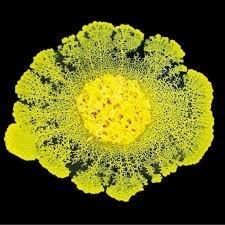
The Blob is a slime mold that inhabits shady, cool, moist areas, such as decaying leaves and logs. Like slime molds in general, it is sensitive to light. Its scientific name is Physarum Polycephalum.
The Blob is used in laboratories to conduct experiments about certain behaviors.
When the Blob is placed in an aggressive environment surrounded by a nutritive environment, the Blob « moves » and, after several trials, reaches the nutritive environment. Each time the Blob is placed again in the same kind of environment, the number of trials to reach the nutritive layer decreases. And when another Blob is placed next to the first one, its number of trials is immediately lower than for the first Blob.
This is interpreted as the Blob having learning and communication capabilities.
The Building Blocks of Intelligence
This means that every life form, from the simplest to the most complex, has capabilities. I prefer to use the word functionalities in this case.
Be cautious: as we consider only one functionality, we will see that it has an impact on the intelligence scale we have seen previously. If I take the functionality of vision, and if I want to compare an eagle with a human, we understand that the vision of an eagle gives the eagle many more options compared to the vision of a human. To speak about intelligence and compare entities, we must consider an exhaustive list of functionalities to approximate the ranking found through our intuition.
In this case, considering learning, building lenses, cameras, and so on gives many more options to a human compared to an eagle. This also implies that the exhaustive list of all functionalities is more than the sum of all functionalities.
Going Deeper into Options
Let us go back to our definition: a force that maximizes options. What do we mean by option?
Remember the definition of artificial: something which is the result of a will emerging to meet needs.
The punctual will that emerges to meet a punctual need will lead to the emergence of a set of options to satisfy that need. These options are generated through different elements.
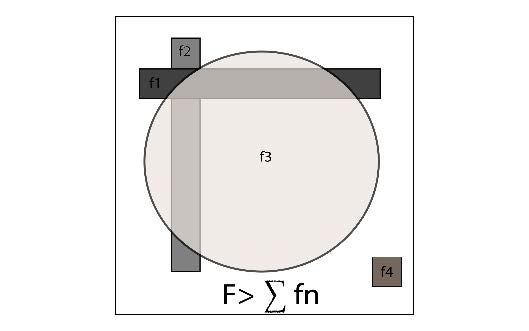
First element: Functionalities. A bacterium has a motor functionality that allows it to move in different directions. These directions are the options the bacterium faces to fulfil a need for nutriment. If we take the example of the one-day-old baby compared to the Nobel Prize winner — since they have the same functionalities (they are both human) — we have seen that the difference between them is related to experimentation. It means that functionalities need to be fed by experimentation to allow options to emerge.
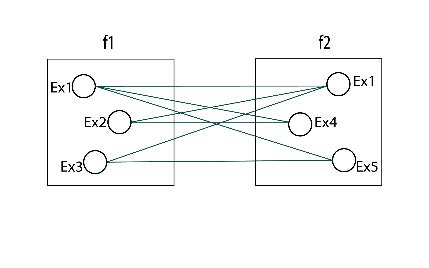
Second element: Pieces of experimentation. But we have also seen that there is a difference between the person who drinks beer and the person who travels the world.
Third element: Quality of experimentation. By quality of experimentation, I mean the capability to link pieces of experience through functionalities to build new combinations and thus new options.
Compared to the eagle, our vision gives us fewer options, but because we can use other functionalities and learn about physics, we are able to build links between physics and vision and make binoculars. We can also see this as the ability to give meaning by linking our pieces of experimentation. Linking pieces of experimentation through different functionalities gives more options than the sum of the pieces of experimentation within each functionality.
This way, intelligence is related to the maximization of options which can be increased by the experimentation and the capability to give meaning.
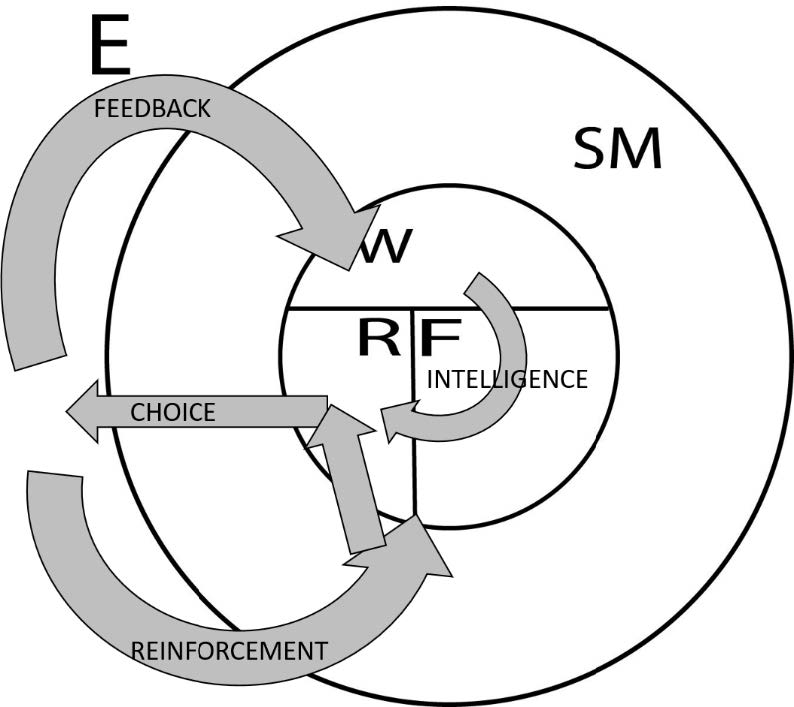
- E : external environment
- SM : Sensory-motor system
- W : will
- F : functionalities
- R : Reinforcement
Intelligence, Choice, and Reinforcement
We have seen that intelligence is not related to the result. However, in the end, a choice between the options will be made. The choice is the execution of one of the options, and the choice has consequences.
Be careful: options are not constrained by the environment. Even if my bank account is empty, the option of going to the Bahamas for one month — to increase my need for pleasure and rest — can exist, but it is not executable. This means that the choice is constrained by the external environment.
The fact that the choice made satisfies (more or less) the need of the moment will change my needs. It is a kind of feedback. But depending on the level of satisfaction, the choice will also reinforce the chosen option, so that in the future, if the option emerges again, it will be more likely (or less likely) to be selected.
This gives us an insight: if you are very efficient at satisfying your needs with the same behavior, there is a risk that you will not experiment with new things and thus impact on your potential to increase your intelligence.
Intelligence is thus a force that maximizes options in quantity and quality.
Applying the Framework to AI (remember it is from 2018)
It is time now to use what we have seen to assess what artificial intelligence is (or not), to check if we speak about it the right way, and to understand why we have not yet found a way to build an Artificial General Intelligence (AGI).
The Current Categories
When people speak about artificial intelligence, they differentiate it into two categories: narrow AI and strong (or general) AI. When speaking about narrow AI, people speak about expert systems (note that I do not use the word intelligence in this case). When they speak about AGI, they speak about a system with a level of intelligence equal to or higher than the level of an average human.
We have two dimensions: expert versus general, and lower versus equal or higher. This should give us a matrix with four entries. But for narrow AI, there is no clear distinction between low and high. And for AGI, it implicitly means high — no one speaks about low.
The « Start Button » Concept
I would like to introduce a new concept to replace the narrow versus general one. This concept is the « start button, » which I differentiate into two categories: « eat » versus « manage your hunger. »
What does this mean?
- The category « eat » is a system that follows an order, a system that does not have an internal state from which a will emerges.
- The category « manage your hunger » is a system that must have an internal state with an emerging will.
Deep Blue: An « Eat » System
Let us take Deep Blue as an example. Deep Blue is a narrow AI, an expert system. Deep Blue can beat the best human at chess. Deep Blue is in the « eat » category. It means that there is no internal need in Deep Blue. When someone pushes the start button, Deep Blue plays chess. There is no dynamic real-time change in its needs; there is only one functionality with pieces of experimentation (the millions of games Deep Blue has played). And there are no links between pieces of experimentation through different functionalities. Deep Blue will not decide to stop playing or to do something else — it will continue to play until the end of the game.
Let us say now that Deep Blue has played one million moves. We can consider that there is a potential for one million options. Now, if you think about an entity that has 5 functionalities and has experimented 50 different things, and if all these experimentation lead to pieces of experience that are linked through functionalities, it leads to more than 200 million combinations.
If we compare a child with an image recognition system, we can see that a child needs only a few trials to recognize a cat, whereas the system needs millions of images to get the same result. This is perhaps a good insight into why expert systems are not efficient at learning compared to a human.
Why You Are More Intelligent Than Deep Blue
Think about a competition between Garry Kasparov and Deep Blue. You will probably say (and it was the case) that Deep Blue is better, and thus more intelligent (which means it maximizes its options more) than Garry. But I can tell you that even if you are not good at playing chess, you are more intelligent than Deep Blue. You have more options: you could unplug Deep Blue, or use a hammer to destroy Deep Blue, or cheat against Deep Blue. And this is because you use more functionalities and because you can make links between pieces of experimentation. You can also decide not to play and go and drink a beer.
We have seen that there is no need and no will inside Deep Blue and so Deep Blue is in the « eat » category. Let us translate that into: « play chess » versus « manage your pleasure + playing chess provides pleasure. »
If we look more carefully at the game between Garry Kasparov and Deep Blue, we can see that in fact, on Deep Blue’s side, there is a kind of « manage your pleasure + playing chess provides pleasure. » It is not inside Deep Blue, but rather inside the human who uses Deep Blue or coded Deep Blue. This way, we can consider Deep Blue as an external functionality of this human.
In this case, when people speak about narrow AI, it is not relevant. It is better to speak about Human Artificially Augmented Intelligence. You can do the same exercise with autonomous cars, or with Alexa, Siri, and all these expert systems.
As it is Human Artificially Augmented Intelligence, there is no more reason to differentiate low level from high level of intelligence in this case.
Artificial General Intelligence
As people speak about AGI, they implicitly speak about a system that replicates human intelligence and therefore must be placed in the « manage your hunger » category. Being in this category implies the existence of an internal state with internal needs from which a will emerges. In this case, as it must be equivalent to human intelligence, we can keep the difference between low level and high level of intelligence.
Low-Level AGI Already Exists
We have seen that the low level of artificial general intelligence is not discussed. In fact, artificial general intelligence on the low side already exists. It is what we call ANIMAT (Animal Material). They are small robots or virtual simulations used in laboratories to study behavior and the impact of natural selection. Scientists use several of them, code an internal state with needs and a few functionalities, and let them behave and learn. After that, they select a small number of them that achieved the best results considering their needs, replicate them, and let them behave again.
In this case, it is better to speak about artificial life with a low level of intelligence.
The most intelligent ANIMATs are reaching the level of intelligence of insects.
High-Level AGI: The Parametrization Problem
« What about AGI with a high level of intelligence? In my opinion they will never exist » (remember this was the statement in 2018).
Intelligence requires a complex dynamic internal state with millions of combinations of needs, like we have. Every combination of needs triggers the emergence of a set of options. How can we translate that for a machine? There is a need for energy; we can have a reward function to replicate satisfaction and dissatisfaction; we can perhaps do something about preserving physical integrity. Already three needs… what about the millions of different combinations of our internal molecules? This dramatically reduces the opportunities to maximize the emergence of different sets of options.
Regarding functionalities, we are already able to replicate most of them. But what about linking the different pieces of experimentation through them?
2026 update : Can we build AGI with a high level of intelligence? The architecture — the structural framework — can be designed. But parametrization cannot be designed. Intelligence requires a complex dynamic internal state with millions of combinations of needs. Every combination triggers the emergence of a different set of options. We can design the mechanism. We cannot manually set the parameters. Nature took 3 billion years of selection to calibrate them. This means that a high-level AGI will not be ‘built’ in the traditional sense — it will have to be ‘cultivated’ through an evolutionary process.
The Natural Selection Imperative
Even if we could build such an AGI, it would have to face the natural selection process. This is a point we have not yet spoken about. We said that intelligence is not related to the result, which means that we can have a highly intelligent entity that always fails, or a less intelligent one that always succeeds.
Why is this so? It is the process of choice. As we have seen, the options generated depend on previous experience. One of them will be executed depending on the environmental constraints. The point is that at the end, you need not only to have an executable option, but the executable option must satisfy the need — otherwise you will not be able to maintain the internal equilibrium.
It seems obvious, but do not forget that we, as humans, are the result of more than 3 billion years of selection with a great deal of failure because of a lack of alignment between need, option, choice, and environment. It means that we may build an AGI by replicating the complexity of our internal needs and endowing it with a long list of functionalities fed by extensive experimentation, but at the end, the AGI will probably not fit the environment. Knowing also that the external environment changes over time, this will lead our AGI to die. And thus, to ensure the sustainability of our AGI, we would need to build millions of them with small differences and let the natural selection process play its role in ensuring the survival of a few.
2026 update: we probably can bypass this by iterating the value of the parameter and keep only a small number of systems.
The Threat: Artificial General Stupidity (2018 statement)
Before concluding, we must speak about a last point: the threat of AGI.
People will try to build AGI. These trials will lead to the emergence of what I call Artificial General Stupidity (AGS). If the AGS has enough power and is efficient in its stupidity, then we have a problem.
By trying to build an AGI, people will mainly fall into three issues:
- The freezing issue: a system that will not work.
- The infinite loop issue: the use of all resources (like the processor of your computer running at full speed, heating, and heating more) for no result. The threat here is the consumption of all resources.
- The paperclip issue: a system that becomes so efficient at doing one task that everything is used by the system for the accomplishment of its unique task — like a machine that transforms all the world’s resources to cover the world with paperclips.
Conclusion
We have defined “artificial” as something that is the result of a will. We have defined “intelligence” as a force that maximizes options. We have seen that « artificial intelligence » is an expression that leads to ambiguity, and it is better to speak about:
- Human Artificially Augmented Intelligence — for what is currently called narrow AI
- Artificial life with low or high level of intelligence — for what is currently called AGI
We have seen that artificial life with a low level of intelligence already exists (ANIMATs). We have seen that the structural framework for higher-level artificial intelligence can be designed, but that its parametrization requires an evolutionary process that cannot be shortcut by engineering. And we have seen that the threat will come from failing attempts to build such a system.
I have tried to be consistent in every aspect of this attempt to redefine intelligence, and I have tried to stick to logical methodology. I invite you to use this approach every time you encounter the word « intelligence, » to test it again and again, and to follow the teaching of Karl Popper about refutability and rationality.